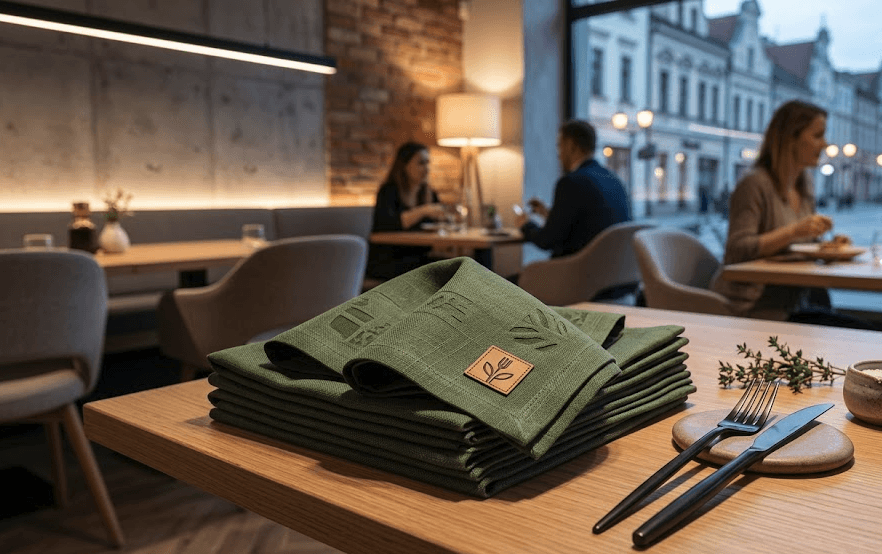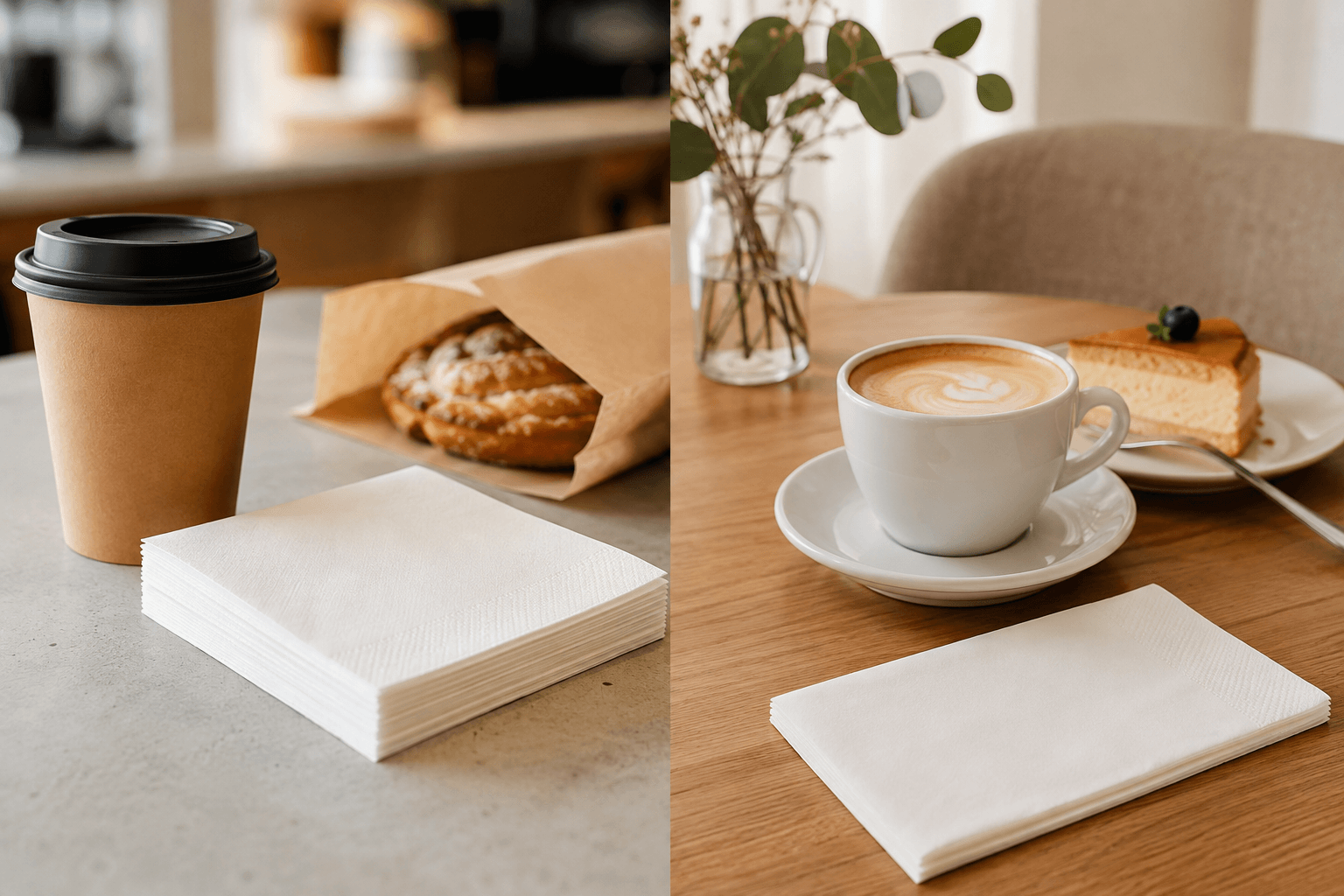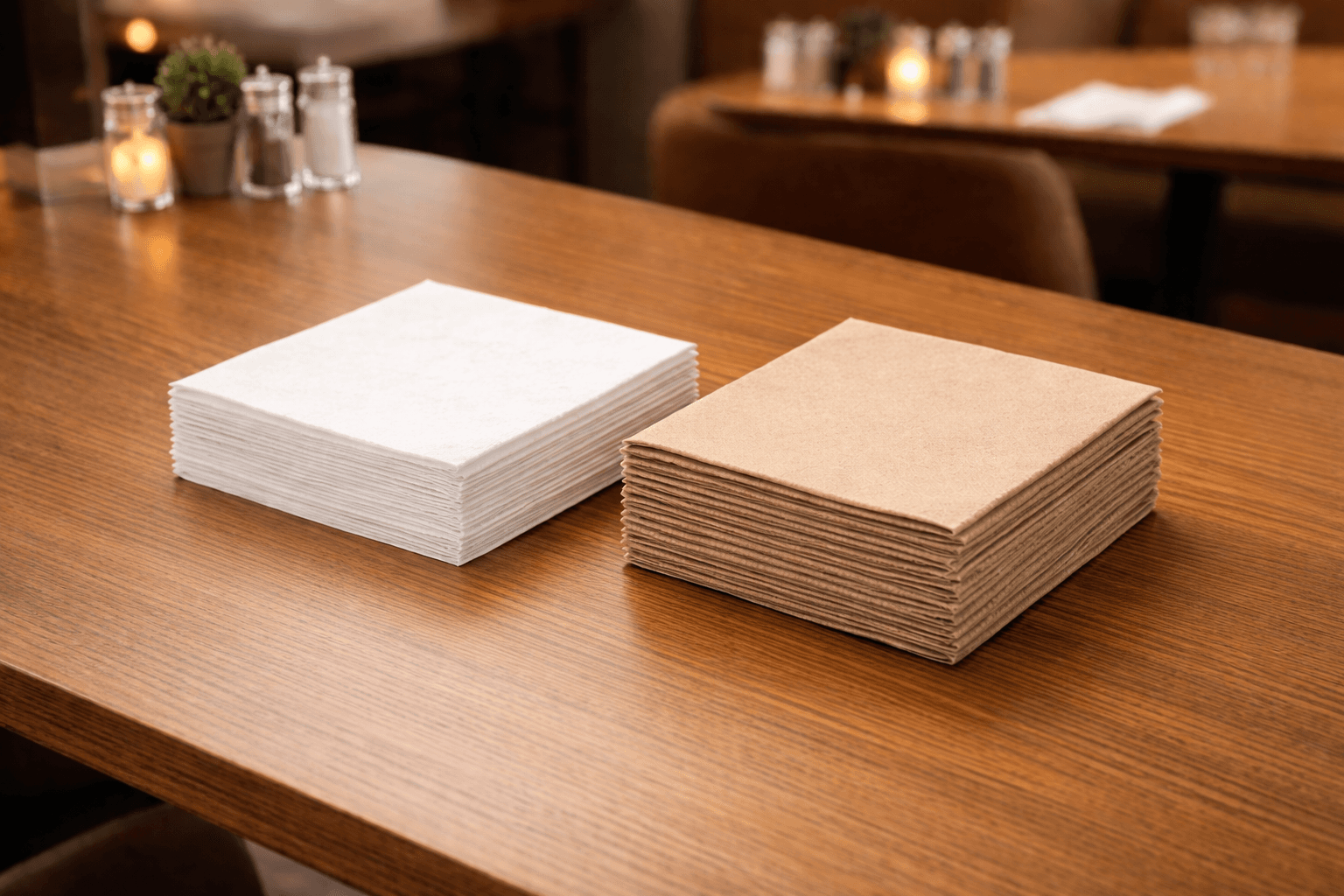
Gastronomic napkins rank among the most underestimated elements of restaurant equipment. Owners spend hours selecting furniture, porcelain, and cutlery, yet treat the napkin question as an afterthought. In reality, the napkin is the item a guest looks at for the longest time throughout the entire meal. Its quality, size, and appearance directly shape brand perception.
In this complete guide, we cover everything you need to know about gastronomic napkins: from types and sizes, through quality parameters, to custom printing options, eco-friendly solutions, and cost-optimization strategies. We address this article to restaurant owners, hotel managers, catering companies, and HoReCa buyers.
Why Napkins Matter in Gastronomy
A napkin serves three fundamental functions in a dining establishment:
- Practical function – wiping hands and mouth, protecting clothing, wrapping cutlery
- Aesthetic function – table decoration element, decorative folding, complementing the table setting
- Marketing function – carrier for logo, brand colors, and promotional messages
Industry research shows that guests evaluate a venue's quality within the first 30 seconds of sitting down. The napkin on the table or in the holder is one of the first brand touchpoints. A cheap, thin, rough napkin lowers the perceived value of the entire experience – even when the food is excellent.
> Key rule: Your napkin should match your venue's segment. Fast food uses 1-ply napkins in dispensers, a café reaches for 2-ply, and fine dining demands 3-ply or fabric napkins.
Types of Gastronomic Napkins
1-Ply Napkins
Single-layer napkins represent the most economical option. They consist of one tissue paper layer weighing 16–19 g/m².
Where they work best:
- Fast-food restaurants and quick-service bars
- Canteens and cafeterias
- Event stands and food trucks
- Self-service dispensers
Pros: lowest unit price, high quantity per package, maximum economy
Cons: low absorbency, tear easily, unsuitable for decorative folding
2-Ply Napkins
The most popular napkin type in gastronomy. Two tissue paper layers deliver good absorbency at a moderate price.
Where they work best:
- Casual dining restaurants
- Cafés and patisseries
- Pizzerias and trattorias
- Pubs and bars
- Business catering
Pros: optimal quality-to-price ratio, good absorbency, foldable, attractive appearance
Cons: not as strong as 3-ply for the premium segment
3-Ply Napkins
The premium tier of paper napkins. Three layers deliver excellent absorbency, softness, and durability.
Where they work best:
- Fine dining restaurants
- 4- and 5-star hotels
- Banquets and wedding receptions
- Business dinners
- Premium catering
Pros: best quality, luxurious touch, perfect for decorative folding, outstanding absorbency
Cons: higher unit price (2–3× more than 1-ply)
Dispenser Napkins
A dedicated dispenser format: 33×33 cm folded 1/8D, that is the N1 system with an offset. Always 1-ply, white or Eco. The offset, a shifted final panel, gives fingers a grip on a single sheet. It works only while the stack stays compressed, so the unit belongs at the pickup point and is replaced at about one third of its load.
Where they work best:
- Self-service zones
- Restaurant restrooms
- Food courts
- Gas station food outlets
Pros: hygienic dispensing (guest touches only their own napkin), controlled consumption, less waste
Cons: limited branding options, require dispenser purchase/lease
→ Learn more: Dispenser Napkins – Product Range
Eco-Friendly Napkins
Produced from FSC-certified cellulose, recycled paper, or alternative fibers (bamboo, sugarcane). Free from chlorine and synthetic dyes.
Where they work best:
- Organic/vegan restaurants
- Hotels with eco-certifications
- Companies with CSR policies
- Tourist-oriented eco-conscious venues
Pros: biodegradable, compostable, positive brand image, growing market trend
Cons: higher price (10–30% more), limited color palette (natural shades)
→ Learn more: Eco-Friendly Napkins – Are They Right for Your Business?
Napkin Sizes Explained – What They Mean and Which to Choose
Gastronomic napkin sizes are given in centimeters when unfolded. Standard formats include:
15×15 cm – Cocktail Format
The smallest format, ideal for drinks. Place it under a glass or cup to protect the surface from condensation.
Applications: cocktail bars, cafés, hotel receptions, events
24×24 cm – Universal Format
The most popular format in the economy category. Large enough for wiping hands, yet compact in a napkin holder.
Applications: fast food, canteens, food courts, cafeterias, pizzerias
33×33 cm – Gastronomic Format
The HoReCa industry standard. Optimal for table service – large enough to protect the guest's clothing.
Applications: restaurants, cafés, pubs, catering, hotels
40×40 cm – Premium Format
A large format for the premium and fine dining segment. Allows for impressive decorative folding (crown, lily, fan).
Applications: fine dining, banquets, weddings, tasting dinners
Size Comparison
| Size | Segment | Typical Plies | Approximate Price (per pc) |
|---|---|---|---|
| 15×15 cm | Cocktail | 1–2 | from €0.001 |
| 24×24 cm | Economy | 1–2 | from €0.005 |
| 33×33 cm | HoReCa Standard | 2–3 | from €0.006 |
| 40×40 cm | Premium | 3 | from €0.012 |
> Tip: Choose the size appropriate to your segment. A 40×40 cm napkin in a fast-food outlet is waste. A 15×15 cm napkin in fine dining is a faux pas.
How to Assess Gastronomic Napkin Quality
Not all napkins are created equal. Here are four key parameters that distinguish a great napkin from an average one:
1. Ply Count
Plies directly affect absorbency and strength. Each layer adds 16–19 g/m² of tissue paper.
- 1-ply: basic – sufficient for quick wiping
- 2-ply: optimal compromise – absorbent, durable, affordable
- 3-ply: premium – best absorbency, soft touch, luxurious feel
2. Gram Weight (g/m²)
Gram weight is the mass of one square meter of paper. The higher it is, the thicker, more absorbent, and more durable the napkin.
| Plies | Typical Weight | Premium Weight |
|---|---|---|
| 1-ply | 16–17 g/m² | 18–19 g/m² |
| 2-ply | 32–34 g/m² | 36–38 g/m² |
| 3-ply | 48–51 g/m² | 54–57 g/m² |
3. Absorbency
Absorbency is measured by the amount of water (in grams) absorbed per gram of napkin. A good 2-ply napkin absorbs 6–8× its own weight in water. Premium 3-ply napkins reach 8–10×.
Practical test: Place a napkin on a wet surface. A good napkin absorbs the moisture within 2–3 seconds without tearing.
4. Softness
Softness depends on cellulose quality and the creping process. Virgin cellulose produces softer napkins than recycled paper. TAD (Through-Air Drying) technology produces the softest paper but raises the price by 30–50%.
Practical tip: Before placing a large order, always request samples. Test the napkins on your own skin – literally. Guests will press them against their face.
Manufacturer vs Wholesaler – Where Should You Buy Napkins?
This is one of the most critical strategic questions for every HoReCa buyer.
Buying Directly from a Manufacturer
Advantages:
- Eliminates middleman margin (savings of 15–40%)
- Full control over product specifications
- Customization options (logo printing, non-standard sizes)
- Fixed pricing and delivery schedules
- Direct contact with the quality department
Disadvantages:
- Higher minimum order quantities (MOQ)
- Potentially longer lead time for the first order
- Narrower product range (manufacturer specializes in their type)
Buying from a Wholesaler / Distributor
Advantages:
- Lower MOQs (even from 1 carton)
- Wide assortment across multiple brands
- Fast delivery from stock
Disadvantages:
- Higher unit price (wholesaler margin of 15–40%)
- No customization options
- Less quality control
- Risk of the wholesaler switching suppliers
Recommendation
| Criterion | Manufacturer | Wholesaler |
|---|---|---|
| Unit price | ★★★★★ | ★★★ |
| Minimum order | ★★★ | ★★★★★ |
| Customization | ★★★★★ | ★ |
| Delivery speed | ★★★ | ★★★★★ |
| Quality consistency | ★★★★★ | ★★★ |
Our recommendation: If you consume more than 50,000 napkins per month, buy directly from a manufacturer. For smaller volumes, a wholesaler may be more convenient.
→ Learn more: Manufacturer vs Importer – Which Offers Better Value?
Custom Printed Napkins – Branding Impact and ROI
A napkin with your logo is one of the cheapest advertising mediums in gastronomy. Your guest sees your logo every time they use it – and that happens several times during a single meal.
Printing Technologies
Flexography – the most popular method in the industry. Prints 1–3 colors using water-based inks certified for food contact. Ideal for logos, slogans, and simple graphics.
Digital printing – enables full-color (CMYK) printing but at higher costs. Used for short runs and special editions.
Printing Costs
The cost of printing a logo on a napkin depends on:
- Number of colors (1 color = cheapest, full-color = most expensive)
- Print run size (more = cheaper per piece)
- Surface coverage (small logo vs. full-napkin print)
Approximate costs:
- 1 color, logo: +10–15% on top of white napkin price
- 2 colors: +15–20%
- 3 colors / full coverage: +20–30%
ROI from Custom Printed Napkins
Consider a restaurant serving 200 guests per day. Each guest uses an average of 2–3 napkins. That equals 400–600 logo contacts daily, or 12,000–18,000 monthly.
The additional printing cost for an order of 100,000 2-ply 33×33 cm napkins runs approximately €120–250 per month. For comparison, a single sponsored social media post costs €75–400 for one-time exposure.
A branded napkin works 365 days a year, at every meal, directly in the customer's hands.
→ Learn more: Personalized Napkins – Is Branding Worth the Investment?
Eco-Friendly Napkins – Trends and Cost Comparison
Sustainability in gastronomy is not a passing trend – it represents a permanent shift across the entire industry. An increasing number of restaurant chains and hotels implement sustainability policies, and paper napkins represent a significant item in the waste balance.
Types of Eco-Friendly Napkins
FSC-certified cellulose – produced from sustainably managed forests. Can be bleached and colored, just like conventional napkins.
Recycled paper – uses processed cellulose fibers. Features a characteristic grey/beige shade. Slightly rougher than virgin cellulose.
Alternative fibers – bamboo, sugarcane, grass. A niche segment, but growing dynamically.
Cost Comparison: Conventional vs Eco-Friendly
| Parameter | Conventional | Eco FSC | Eco Recycled |
|---|---|---|---|
| Price (2-ply, 33×33) | €0.004–0.006 | €0.005–0.009 | €0.004–0.007 |
| Cost premium | – | +15–30% | +10–20% |
| Softness | ★★★★★ | ★★★★ | ★★★ |
| Color | White, full palette | White/natural | Natural |
| Certification | – | FSC | Recycled |
| Biodegradability | Yes | Yes | Yes |
Arguments for Going Eco
- 73% of consumers in 2025 declared a preference for venues using eco-friendly products (NielsenIQ report)
- Hotels with Green Key certification require at least 50% eco-certified products
- ESG programs increasingly cover single-use material suppliers
→ Learn more: Eco-Friendly Napkins – Are They Right for Your Business?
How to Choose the Right Napkins for Your Business Type
Every type of dining establishment has different needs. Below are specific recommendations:
Fine Dining Restaurant
- Size: 40×40 cm or 33×33 cm
- Plies: 3-ply
- Color: white or subtle ecru
- Print: logo in 1 color, discreet
- Eco: FSC certification recommended
- Budget: highest quality is the priority, not price
Casual Dining / Pizzeria
- Size: 33×33 cm
- Plies: 2-ply
- Color: white or Eco (unbleached paper)
- Print: logo + slogan, 1–2 colors
- Eco: optional
- Budget: optimal quality-to-price ratio
The full choice of format, plies and counts for this segment, separately for the room and for delivery, is in the guide to napkins for pizzerias.
Fast Food / Quick-Service Bar
- Size: 24×24 cm (holder) or dispenser
- Plies: 1-ply
- Color: white
- Print: optional (less effective in dispenser)
- Eco: recycled paper = savings + image
- Budget: lowest price, high volumes
Café / Patisserie
- Size: 24×24 cm, 33×21 cm with sandwiches and lunch
- Plies: 2-ply
- Color: white or Eco
- Print: logo, plus seasonal designs
- Eco: recommended – café customers value sustainability
- Budget: moderate
Full format, ply and variant selection for this segment is in the guide to napkins for cafés and bakeries.
Hotel (Restaurant + Room Service)
- Size: 33×33 cm (restaurant), 24×24 cm (bars, room service)
- Plies: 2-ply (standard), 3-ply (à la carte restaurant)
- Print: hotel logo, elegant design
- Eco: required for eco-certifications (Green Key, EU Ecolabel)
- Budget: varied – premium for the restaurant, economy for room service
Catering / Events
- Size: 33×33 cm or 40×40 cm (banquets)
- Plies: 2–3-ply
- Print: event-specific (company logo, event logo, bride and groom names)
- Eco: growing expectation from corporate clients
- Budget: depends on the end client
Pricing Factors and Cost Optimization
The price of a gastronomic napkin depends on multiple variables. Understanding them allows you to optimize your budget strategically.
What Affects Napkin Pricing?
- Ply count – each additional layer increases the price by 40–70%
- Size – larger format = more raw material = higher price
- Gram weight – higher weight = better paper = higher cost
- Printing – adds 10–30% to the base price
- Raw material – virgin cellulose > recycled > alternative fibers
- Certifications – FSC/PEFC add 5–15% to the price
- Order volume – more = cheaper (volume degression)
- Seasonality – cellulose prices fluctuate cyclically
Cost Optimization Strategies
1. Buy directly from a manufacturer
You eliminate the middleman margin. On an annual purchase of 1 million napkins, you save €700–2,000 per year.
2. Negotiate annual contracts
A fixed price for 12 months protects against raw material price increases. Manufacturers offer discounts for volume commitments.
3. Optimize size and plies
Do not overpay for parameters that do not match your segment. A fast-food outlet does not need 3-ply 40×40 cm napkins.
4. Standardize orders
One format and one napkin type for the entire venue (except premium zones) simplifies logistics and lowers prices.
5. Order in advance
Planned orders placed 2–4 weeks ahead cost less than express fulfillments.
6. Test suppliers
Request samples from 3–5 manufacturers. Compare quality, price, lead time, and flexibility. Choose a partner, not the cheapest quote.
Sample Monthly Calculation
A restaurant serving 150 guests per day, 2 napkins per guest:
| Item | 1-ply 24×24 | 2-ply 33×33 | Printed 33×33 |
|---|---|---|---|
| Daily usage | 300 pcs | 300 pcs | 300 pcs |
| Monthly usage | 9,000 pcs | 9,000 pcs | 9,000 pcs |
| Price per pc | €0.002 | €0.005 | €0.006 |
| Monthly cost | €18 | €45 | €54 |
| Annual difference | – | +€324 | +€432 |
The difference between the cheapest and the premium printed option is just €36 per month – less than the cost of a single dinner for two at a restaurant.
Summary – Key Takeaways
Choosing gastronomic napkins is a decision that truly impacts your operational budget, brand image, and guest experience. Here are the most important takeaways from this guide:
✓ Match the napkin to your segment – do not overpay for premium in fast food, and do not cut corners on quality in fine dining.
✓ Focus on parameters – ply count, gram weight, absorbency, and softness are concrete, measurable quality indicators.
✓ Buy directly from a manufacturer – you save 15–40% and gain access to customization. The investment in logo printing pays for itself within the first weeks.
✓ Consider eco options – eco-friendly napkins cost only slightly more, yet build a positive image among a growing group of conscious consumers.
✓ Optimize costs strategically – annual contracts, format standardization, and planned orders help you save 20–35% of your napkin budget.
✓ Test before ordering – request samples from several manufacturers and test them under real venue conditions.
> Ready to take action? Contact us – we will help you select napkins perfectly matched to your venue. We offer free samples, technical advice, and competitive prices directly from the factory.