Most guests never say, "great napkin." Yet this small detail often shapes the first emotional signal at the table. It works fast, intuitively, and mostly below conscious awareness.
In hospitality, emotion is built from micro-moments. Food quality matters most, but touch, light, sound and table materials complete the experience. A napkin affects two high-impact senses at once: sight and touch. That is why its influence can be larger than many operators expect.
The first 10-second impression
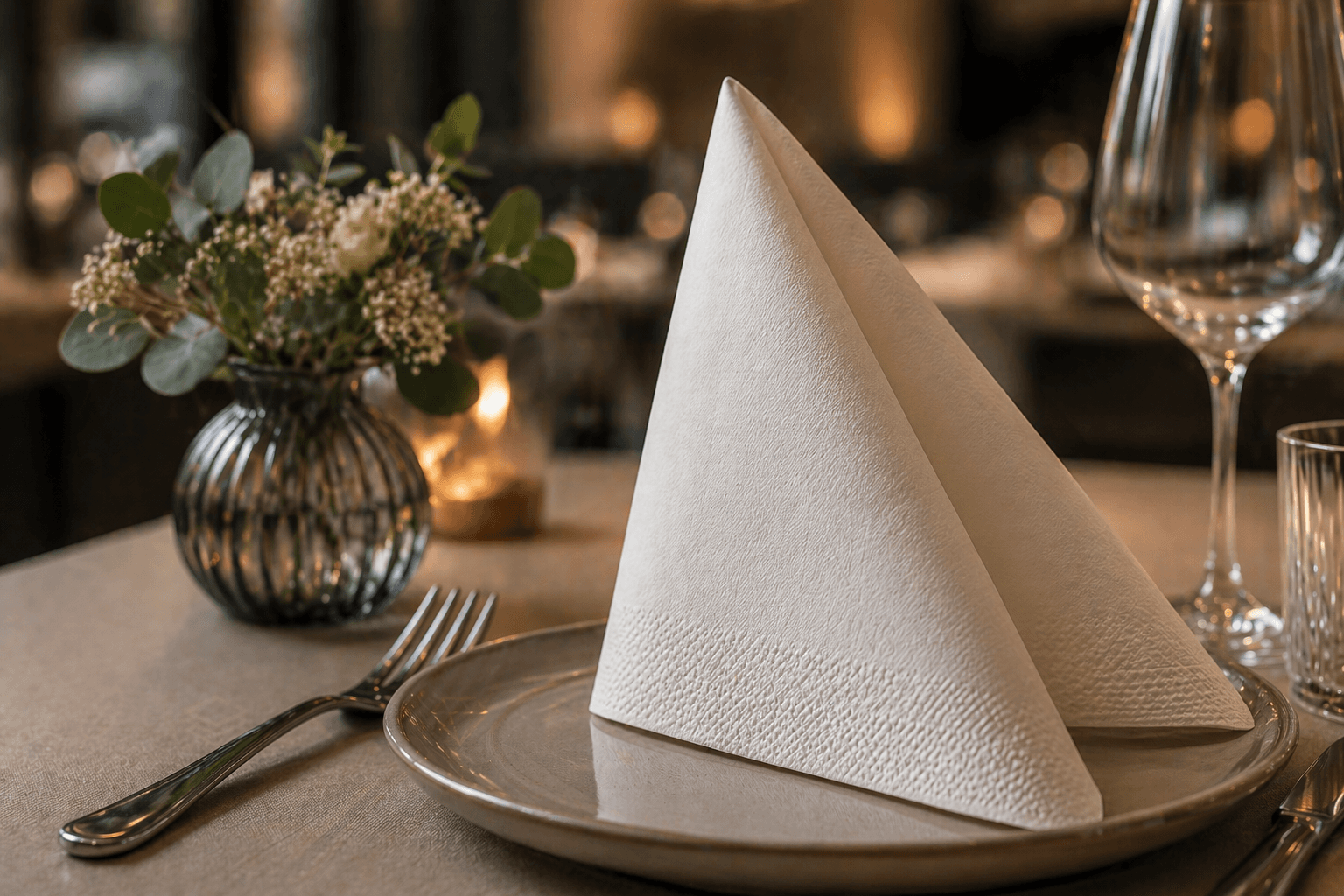
When guests sit down, they run a rapid quality scan: orderly or random, cared-for or improvised. A thin, rough, poorly folded napkin can lower perceived standards instantly. A soft, clean, visually coherent one increases confidence in the whole venue.
This is the same premium-packaging principle: people infer total quality from small cues.
Touch and emotional safety
A napkin stays in a guest's hand throughout the meal. That ongoing tactile contact supports comfort and a sense of control. Better absorbency and softness translate into perceived hygiene and reliability.
Operationally, this can affect dwell time, dessert uptake and willingness to return.
Color as emotional direction
Napkin color sets emotional tone:
- White and ecru suggest cleanliness and calm.
- Navy and dark green communicate confidence and class.
- Warm neutrals create comfort and intimacy.
- Highly saturated colors fit energetic concepts but can overwhelm premium positioning.
Best practice: choose color for concept fit, not only purchase price.
Branding without visual noise
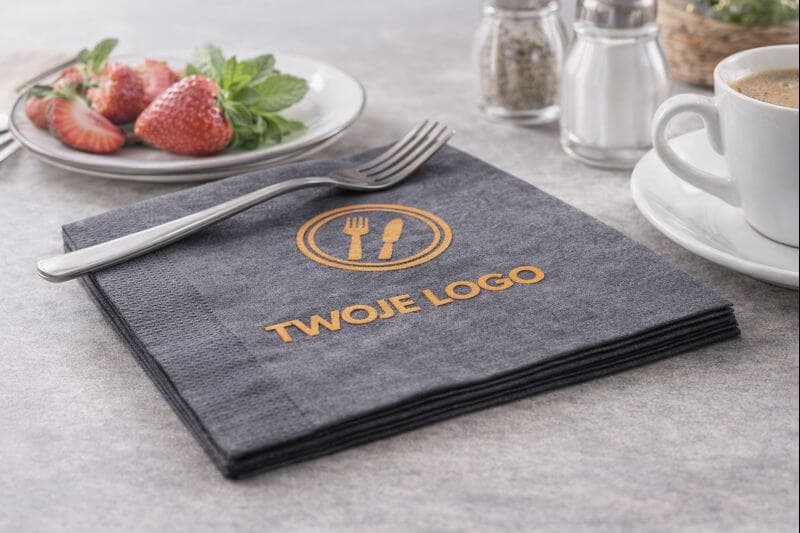
A personalized napkin does not have to look promotional. Subtle logo placement, balanced margins and proper contrast can reinforce brand consistency in an elegant way.
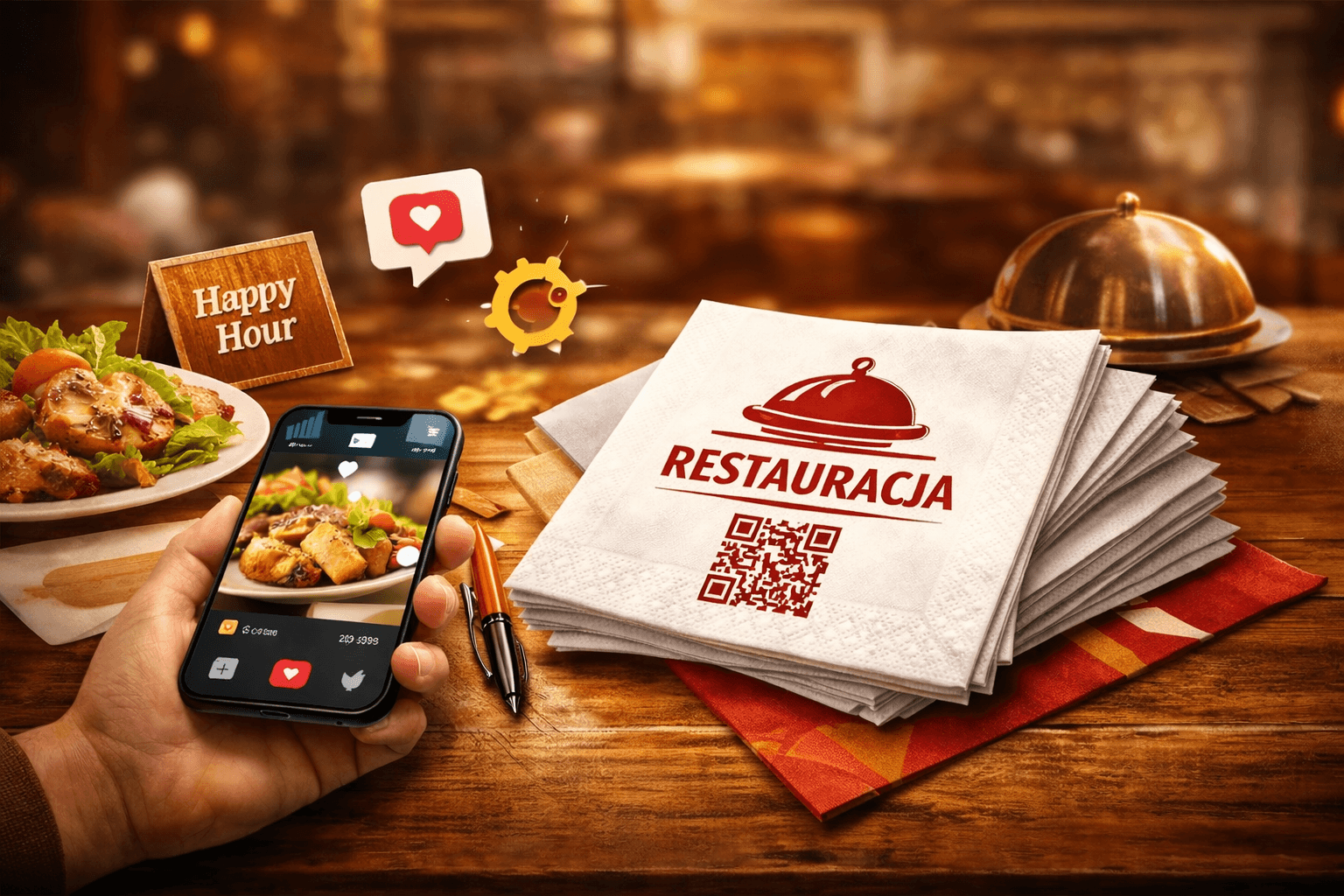
If you combine design with utility, see our article on QR codes on napkins.
How to test impact in practice
- Select two napkin variants (current vs upgraded).
- Run a 3-4 week controlled comparison.
- Collect guest and staff feedback.
- Compare atmosphere ratings, dessert conversion and return behavior.
For cost optimization alongside experience quality, this guide may help: reduce disposable costs in hospitality.
Conclusion
A napkin is not only a functional disposable item. It is an emotional interface between guest and brand. When selected intentionally, it elevates perceived quality, improves comfort and supports repeat visits with minimal operational disruption.
A Story From Service: Two Tables, Two Outcomes
On a Friday evening in Manchester, a brasserie manager ran a quiet experiment. The menu did not change. The chef did not change. Staff briefing stayed exactly the same. The only variable was table setup. Half the room kept a standard low-cost napkin. The other half used a heavier, softer fold with a cleaner edge finish and subtle embossed branding.
At the end of the shift, comments from guests sounded familiar but revealing: "It felt calmer over there," "That side looked more polished," "I don't know why, but service seemed smoother." In blind post-visit feedback, the "premium napkin" zone scored atmosphere higher by a double-digit margin.
The lesson was not that napkins are magic. The lesson was that perception has architecture. Guests build meaning from sensory clues long before they evaluate the bill.
What Happens in the Brain Before the First Bite?
Hospitality teams often assume judgment begins with food. Cognitive psychology suggests otherwise. People start forming value expectations in seconds through what researchers call predictive coding. The brain takes sparse signals and predicts quality. If signals are coherent, trust rises. If signals clash, cognitive friction appears.
A napkin participates in this prediction loop because it is immediate, proximate, and repeated. Guests touch it several times. They place it on their lap. They compare it, often unconsciously, with glassware, plate temperature, and table spacing. Each touch confirms or challenges an internal question:
"Is this place in control?"
If the answer trends toward yes, guests become more forgiving of small delays and more receptive to recommendations.
Which guest segments react fastest?
Not every audience responds equally. Business diners and celebration guests tend to notice consistency cues faster than quick-lunch traffic. International visitors in unfamiliar cities also rely heavily on physical signals because they have less context and fewer local references.
In practical terms, this means tactile details matter even more when your audience is high-intent, high-anxiety, or high-spend.
Touch as Brand Language, Not Utility
A napkin does a practical job, but in premium environments it also behaves like a micro-gesture of hospitality. Material weight, edge softness, absorbency, and fold memory all communicate intent.
- A stiff, noisy napkin can suggest convenience.
- A soft but weak napkin can suggest style without substance.
- A balanced napkin (soft, stable, absorbent) signals confidence.
This is why procurement decisions should not be made only on cost per thousand units. What matters is cost per emotional outcome.
Can guests describe this consciously?
Usually not in technical terms. They may say "comfortable," "tidy," or "elegant." Yet those simple words are downstream of specific sensory mechanics. If your brand promise includes care, precision, and reliability, the napkin has to speak the same language as your menu and your service choreography.
Visual Calm and the "Micro-Luxury" Effect
Luxury in modern hospitality is rarely loud. It is often quiet coherence. Napkin color and print contrast influence visual noise at table level. Clean neutrals and controlled accent tones support what designers call visual rest. Visual rest lowers cognitive load. Lower cognitive load increases perceived comfort.
Ask this question during a table audit:
Does the napkin reduce or increase visual tension?
If logos are too dominant, if color temperature clashes with lighting, or if folds lose shape under warm lamps, your setup may be creating subtle stress.
A premium table should feel inevitable, not decorated.
Brand Trust, Pricing Power, and Review Language
Restaurants that improve tactile and visual consistency often notice a curious effect: guests use more quality-coded adjectives in reviews. Words like "refined," "thoughtful," "well-run," and "attention to detail" appear more frequently.
Those words matter commercially.
They support pricing confidence, justify premium pairings, and reduce discount pressure because value is felt, not argued.
How does this affect average spend?
When emotional trust rises, guests are less defensive in decision-making. They are more likely to accept a sommelier suggestion, add a side, or stay for dessert. Not because of persuasion scripts, but because the environment feels credible.
Practical Playbook: Upgrade Without Drama
You do not need a full relaunch. Use a staged protocol:
- Define one emotional goal for the quarter (for example: calmer premium atmosphere).
- Select two napkin specifications that differ clearly in touch profile.
- Test for 21 to 28 days in comparable service windows.
- Track three behavioral metrics: dessert conversion, dwell time, and review language.
- Add one staff observation field after each shift.
Then run a short debrief and decide with evidence, not opinion.
What should you measure beyond sales?
Measure friction indicators too: complaints about pacing, request frequency for replacements, and perceived cleanliness comments. These often move before revenue metrics do.
Frequently Asked Questions
Does napkin quality change how expensive a restaurant feels?
Yes. Guests use tactile and visual cues to estimate quality before tasting food. Better materials increase perceived care and consistency.
Is branded napkin printing worth it for premium positioning?
Yes, if branding is restrained. Subtle identity marks improve recall without adding visual noise.
What is the fastest way to test emotional impact at table?
Run a controlled A/B setup for 3-4 weeks and compare sentiment in reviews, atmosphere ratings, and repeat-visit signals.
Final Reflection
In premium hospitality, details are not decoration. They are decisions about how a guest should feel.
A napkin is one of the few objects that is seen, touched, and reused within a single visit. That gives it unusual strategic value. When selected intentionally, it supports calm, trust, and perceived mastery. When neglected, it creates subtle doubt.
If your brand promise is quality, your table should communicate quality before the first word from staff and before the first bite from the kitchen. The napkin is not the whole story, but it is often the first sentence.
Extra Lens: A 30-Day Operational Test Blueprint
If you need a fast, low-risk framework, run a 30-day protocol with fixed variables.
- Week 1: baseline with current napkin spec.
- Week 2 and 3: upgraded spec in comparable service windows.
- Week 4: validation and team debrief.
Track atmosphere language in reviews, repeat intent, dessert conversion, and service friction notes.
Why this works
It separates opinion from evidence. Teams stop debating taste and start discussing outcomes.
Short Premium Conclusion
In high-end hospitality, trust is cumulative. Guests read care through repeated details. A napkin is one of those repeated details, and therefore one of the most economical ways to strengthen premium perception with measurable impact.
Additional Expert Note: 60-Day Signal Tracking
A practical premium standard is not judged in one busy weekend. It is judged in pattern stability over time. In many restaurants, the first strong movement appears in qualitative feedback language, then in repeat behavior, then in basket value.
That sequence matters for decision-making. If managers expect immediate revenue jumps, they may stop a good initiative too early. A better approach is phased evaluation:
- sentiment shift,
- trust and comfort indicators,
- commercial conversion.
Leadership checklist
- Is the upgraded napkin used consistently across all shifts?
- Is the visual standard still strong after multiple deliveries?
- Does staff behavior become calmer and more precise around table setup?
Closing operational insight
Premium identity grows through repeatable details. The napkin is one of the few details that a guest repeatedly sees and touches in one visit. That makes it a highly efficient trust lever when managed intentionally.