Paper napkins are one of those products that get ordered on autopilot – you reorder the same thing and rarely consider alternatives. That's a missed opportunity, because well-chosen napkins can improve guest comfort, strengthen your venue's image, and optimise costs.
This guide will help you make informed napkin choices for your restaurant, café, hotel, or catering business. No unnecessary theory – just practical advice. Browse our full napkin collection.
Why napkin choice matters
A napkin is one of the few products in hospitality that every guest physically handles. For several minutes during their meal, they're in direct contact with it. During that time they assess its quality, notice any branding, and subconsciously connect the impression to your venue.
A thin, rough napkin can undermine the impression of even the best dish. A thick, soft napkin in an unassuming bistro can pleasantly surprise.
Subtle, but real.
Size – what to choose?
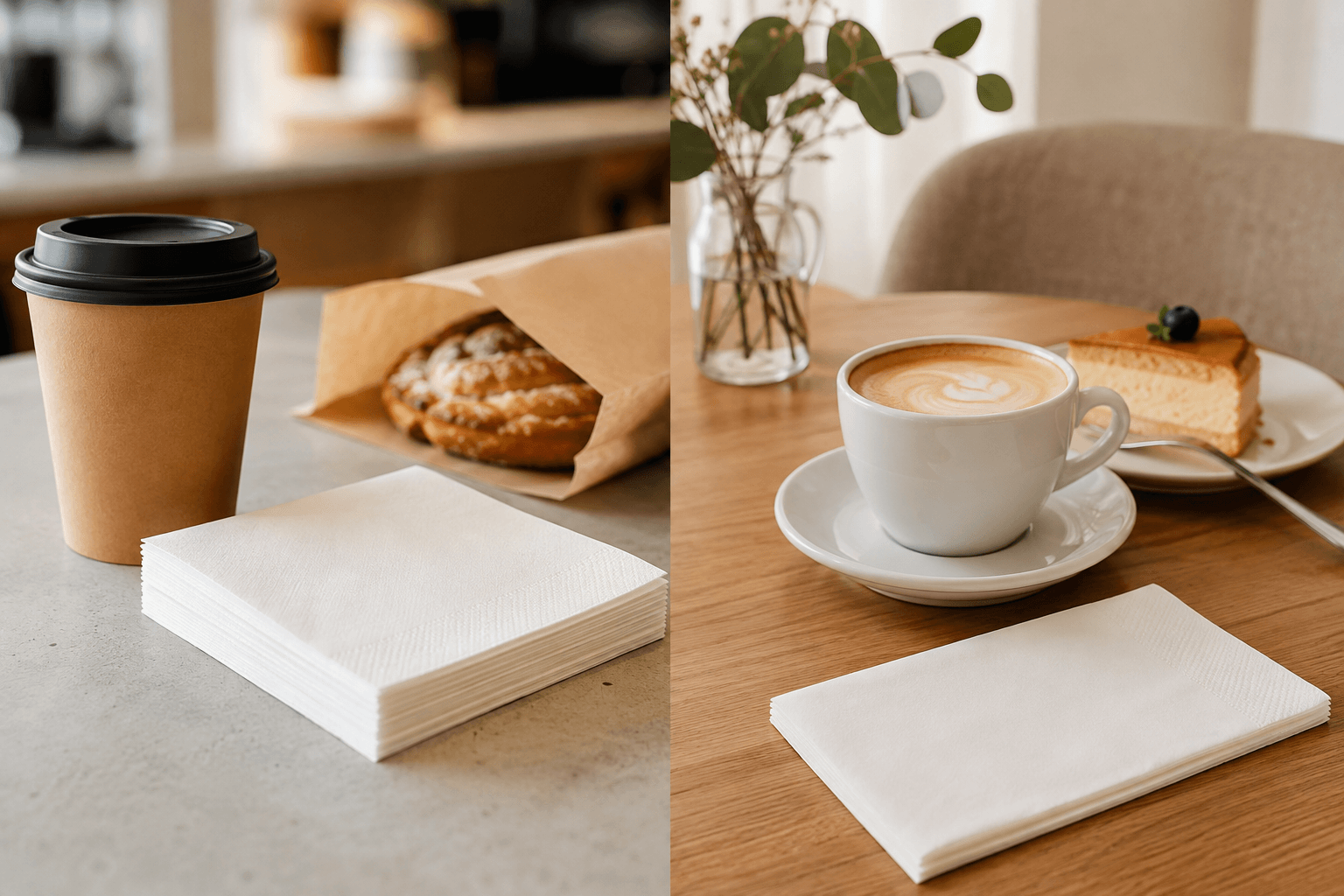
Cocktail napkins (15×15 cm / 6×6 in)
Small napkins for drinks, cocktails, bar snacks. Won't work for a full meal, but perfect for protecting hands from a cold glass.
Where: bars, pubs, cafés (with coffee and cake)
Luncheon napkins (24×24 cm / 10×10 in)
The most popular size in casual dining. Large enough for most situations, yet economical.
Where: cafés, bistros, casual restaurants, hotel breakfasts
Dinner napkins (33×33 cm / 13×13 in)
Classic restaurant size. Provides comfort for any meal – from starter to dessert. See our gastronomy napkins.
Where: restaurants, hotels, catering, events
Lunch format (33×21 cm)
Economical format, popular for quick service. Smaller than standard but still functional.
Where: lunch spots, canteens, cafeterias
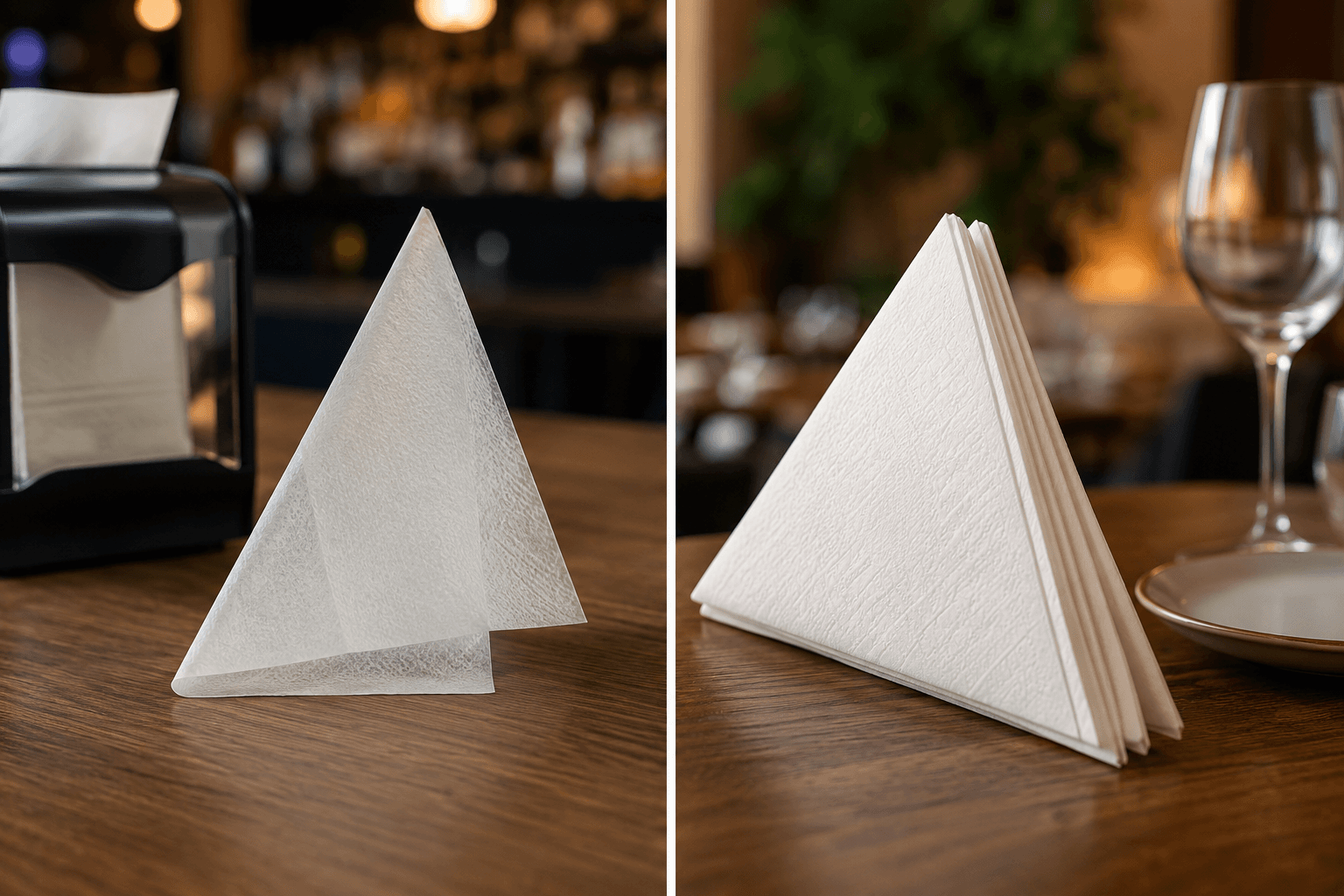
Dispenser napkins (1/8 fold)
Folded napkins for wall-mounted or counter dispensers. Hygienic – guests take one napkin at a time. Check out our dispenser napkins.
Where: fast food, food courts, self-service
Ply count – what difference does it make?
Ply count isn't just marketing. There's a real difference in use.
1-ply – Thin, economical. Lower absorbency, may tear more easily. Good for dispensers and quick service.
2-ply – The sweet spot for price and quality. Good absorbency and softness. Most common choice in hospitality. Works for 90% of situations.
3-ply – Premium quality. Very absorbent and soft. Luxury feel. Fine dining, 4-5 star hotels, special events.
Practical rule: If you serve meals that require frequent hand wiping (ribs, burgers, seafood) – choose higher ply count.
Paper weight (GSM)
GSM (grams per square metre) indicates paper thickness. Higher GSM means thicker, more durable napkins.
- 15-17 GSM – economical, thin
- 18-20 GSM – standard, good quality
- 21-25 GSM – premium, noticeably thicker
Weight also affects how the napkin "sits" – thinner ones are more flowing, thicker ones more stable on laps.
Colour – white or natural?
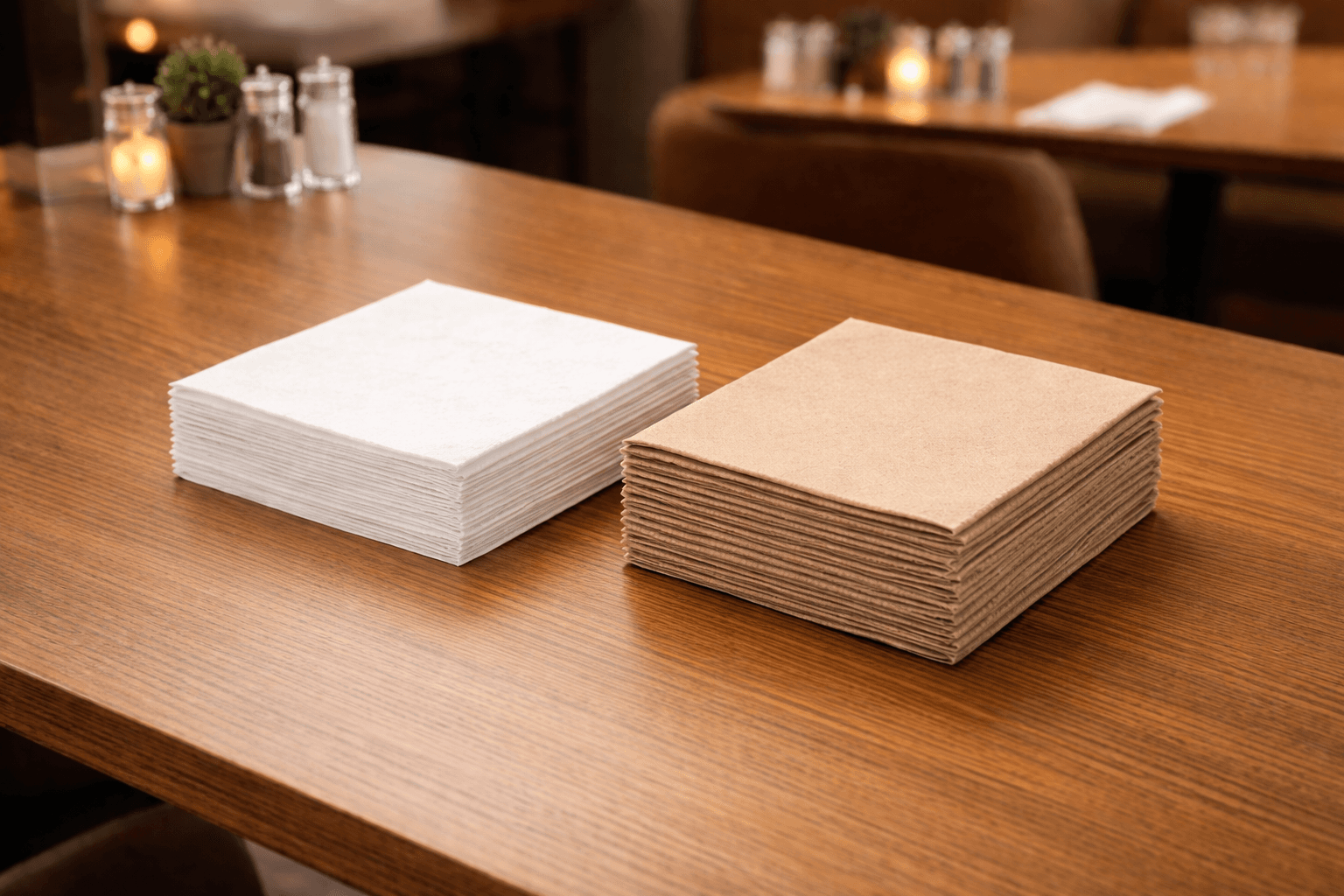
White napkins – Classic choice, suits any décor. Associated with cleanliness and elegance. Dominant in fine dining and hotels.
Eco/natural napkins – Warm, beige tone. No chemical bleaching. Emphasise natural venue character. Increasingly popular and accepted.
Coloured napkins – Red, navy, green, black. Match your brand identity. Ideal for themed events. More expensive than white.
Customisation – is it worth it?
A napkin with your logo is one of the cheapest ways to build brand recognition. Guests see your logo throughout their meal.
When it's worth it:
- You have a distinctive logo
- You run multiple locations
- You do events and catering
- You want to stand out from competition
When maybe not:
- Very small venue with low traffic
- Budget is critical
- You're testing the market
How to match napkins to venue type
Fine dining restaurant:
- Size: 33×33 cm or larger
- Ply: 3
- Colour: white or muted tones
- Optional: subtle logo customisation
Café/bistro:
- Size: 24×24 cm
- Ply: 2
- Colour: white, natural, or matching décor
Fast food/food truck:
- Size: dispenser (1/8 fold) or 24×24 cm
- Ply: 1-2
- Priority: functionality and price
Hotel restaurant:
- Size: 33×33 cm
- Ply: 2-3
- Hotel logo customisation recommended
Event catering:
- Size: depends on event type
- Ply: 2-3
- Customisation often required
What to check when ordering
- Request samples – Touch, unfold, assess quality before a large order
- Check certifications – FSC, ISEGA for eco options
- Compare prices at different quantities – Larger orders mean lower unit price
- Factor in delivery costs – Napkins are light but bulky
- Plan buffer stock – Better to have extra than run out during peak season
How to calculate your needs
Simple formula:
Daily guests × average use per person × days between deliveries × 1.2 (buffer)
Average use:
- Breakfast/coffee: 1-2 napkins
- Lunch: 2-3 napkins
- Dinner: 3-4 napkins
- "Messy" meals (ribs, burgers): 4-6 napkins
Summary
Choosing napkins is a simple decision that can impact guest comfort and venue image. Key points:
- Match size to meal types
- Choose ply count appropriate to venue character
- Consider customisation with higher traffic
- Order with buffer stock
There's no single "best" napkin – there's the best napkin for your venue.